For operations and support leaders
When senior engineers retire: keeping technical knowledge in the business
Most of what a senior engineer knows is exceptions that nobody wrote down. How to keep it, without asking them to write a book.

Lingo
4 min read
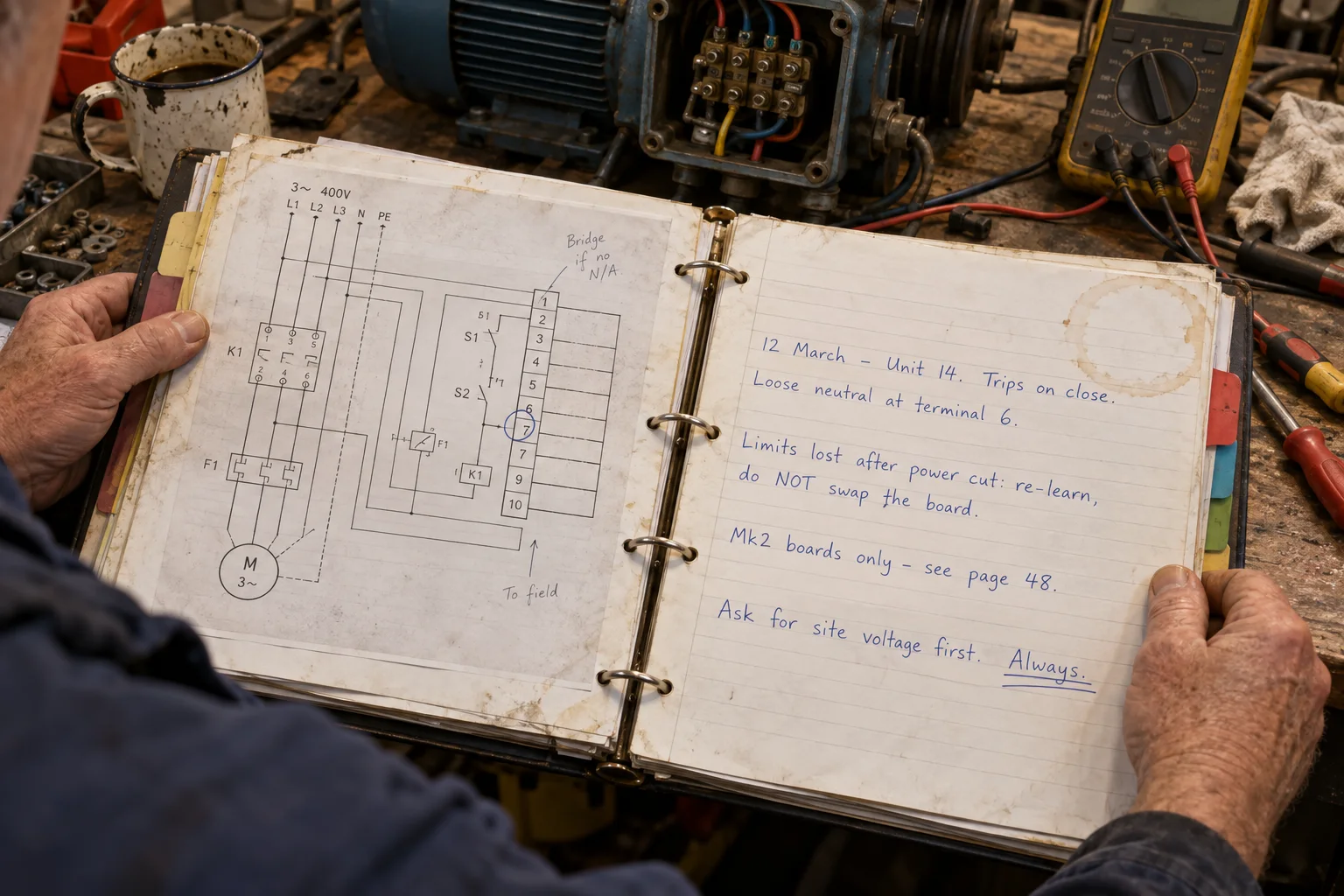
Every manufacturer has one. The engineer who has supported the product since before the current model existed, who can diagnose a fault from the sound of the installer’s voice, and who is the reason the helpline works at all. One day they will retire, and the questions will keep coming.
In short
- In engineering construction the share of workers over 60 rose from 11.6% to 14.7% in three years. It is the nearest sector to manufacturers’ support teams with a published age profile.
- Most of what senior engineers know is not procedure; it is exceptions, and exceptions are only written down when someone asks.
- The practical way to keep it is to write each answer they give into the guide, at the time they give it.
What the figures do and do not show
The Engineering Construction Industry Training Board’s 2024 census covered 74,609 workers at 162 establishments in Great Britain. It found that workers over 60 made up 14.7% of the workforce, up from 11.6% three years earlier. Engineering construction means process plant, nuclear and oil and gas, so this is a neighbouring sector, the nearest we found with a published age profile, and not a measure of manufacturers’ support teams.
You do not need a national statistic to know your own position. List the people who take the questions nobody else can answer, and when each expects to retire.

What exactly is being lost
Not the procedures. Those are in the manual.
What leaves with a senior engineer is the layer on top: the exceptions, the history, the combinations nobody wrote down because they only come up twice a year.
| Kind of knowledge | Where it lives now | How to keep it |
|---|---|---|
| Procedures | The manual, the bulletin, the parameter table | Already written. The problem is getting it to the installer. |
| Exceptions | An engineer’s head: the fix that is not in the manual | Written into the guide when they answer a question it did not cover. |
| History | Old emails, a notebook, a note on the test rig | Gathered when the same question is asked twice. |
| Judgement | Knowing which customer to ring back first | Stays with people. It is why you have them. |
Why knowledge projects fail
The usual response is a project: interview the engineer, write a knowledge base, put it on the intranet. It rarely survives contact with a working week. The engineer is too busy answering the questions to write down the answers, and a document nobody asked for is out of date the day it is finished.
A lighter approach asks little extra of the engineer. They answer the questions that reach them, as they always have. The difference is what happens to each answer afterwards.
Capture as a by-product of the job
Five steps
- An installer asks for a person
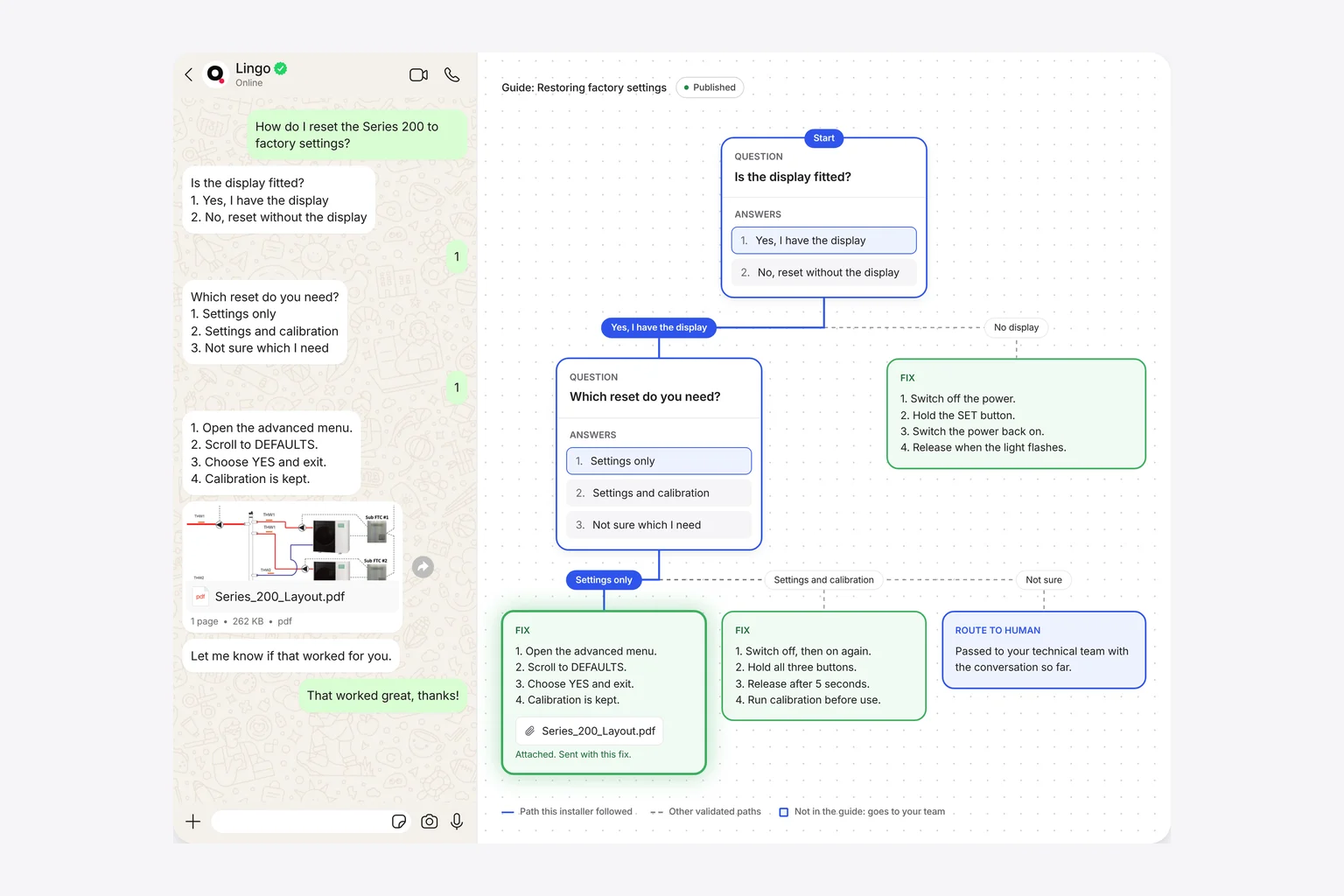
- The request reaches your team, who reply in the same conversation
- The engineer answers, as they would have by phone
- Someone on your team writes the answer into the guide and publishes it
- The next installer who follows that guide gets it
Done consistently, the guide gains the exceptions, and it gains them where installers actually ask. One study from another setting is suggestive: in an NBER working paper on 5,179 support agents at a software company, a generative AI assistant raised issues resolved per hour by 14% on average, and by 34% for novice and low-skilled agents, with minimal impact on the most experienced. That is not a result for guides or for installers, but it fits the idea that the gain comes from spreading what experts know.
Start before the leaving do
The time to begin is while the engineer is still answering the phone. Every question they answer between now and their last day is one the guide could keep. The knowledge capture page shows how it works in Lingo.
Sources
- ECITB Workforce Census 2024Engineering Construction Industry Training Board, January 2025. 74,609 workers at 162 establishments in Great Britain.
- Generative AI at workBrynjolfsson, Li and Raymond, National Bureau of Economic Research working paper 31161, April 2023, revised November 2023. The version later published in the Quarterly Journal of Economics (2025) reports 5,172 agents and a 15% average gain.
Questions people ask
How do you stop technical knowledge leaving when an engineer retires?
Capture it as a by-product of their normal work. When an experienced engineer answers a question the documentation did not cover, the exchange is kept, and someone on the team can write that answer into the guide and publish it. Your team stays in control of what is written.
Is the engineering workforce getting older?
In engineering construction in Great Britain, yes: the ECITB’s 2024 workforce census found workers over 60 made up 14.7% of the workforce, up from 11.6% in 2021. That sector is process plant, nuclear and oil and gas, the nearest neighbour to manufacturers’ technical support with a published age profile. For your own team, list who takes the hardest questions and when each expects to retire.
Does AI help less experienced support staff more than experienced ones?
One large study says so. A working paper on 5,179 support agents at a software company found a generative AI assistant raised issues resolved per hour by 14% on average, and by 34% for novice and low-skilled agents, with minimal impact on the most experienced.