For technical support managers
How much of your technical support is repetitive? How to find out in a week
Nobody publishes a reliable figure for manufacturers’ helplines, so measure your own. A five-day method, a worked example and what to do with the answer.

Lingo
5 min read

Every support manager has a feeling for how much of the day goes on the same questions. Feelings are hard to put in a business case. There is no published figure for manufacturers’ helplines that you can borrow, so here is how to measure your own in five working days, with a worked example of what the result looks like.
In short
- No reliable public figure exists for the share of manufacturers’ technical support calls that are repetitive. Measure your own.
- Tally a week of calls by topic, then put each topic through two tests: is the answer documented, and would any two advisors give the same answer?
- The result is a ranked list of topics and three shares: routine, needs judgement, and not documented. A worked example shows what it looks like.
Why there is no number to borrow
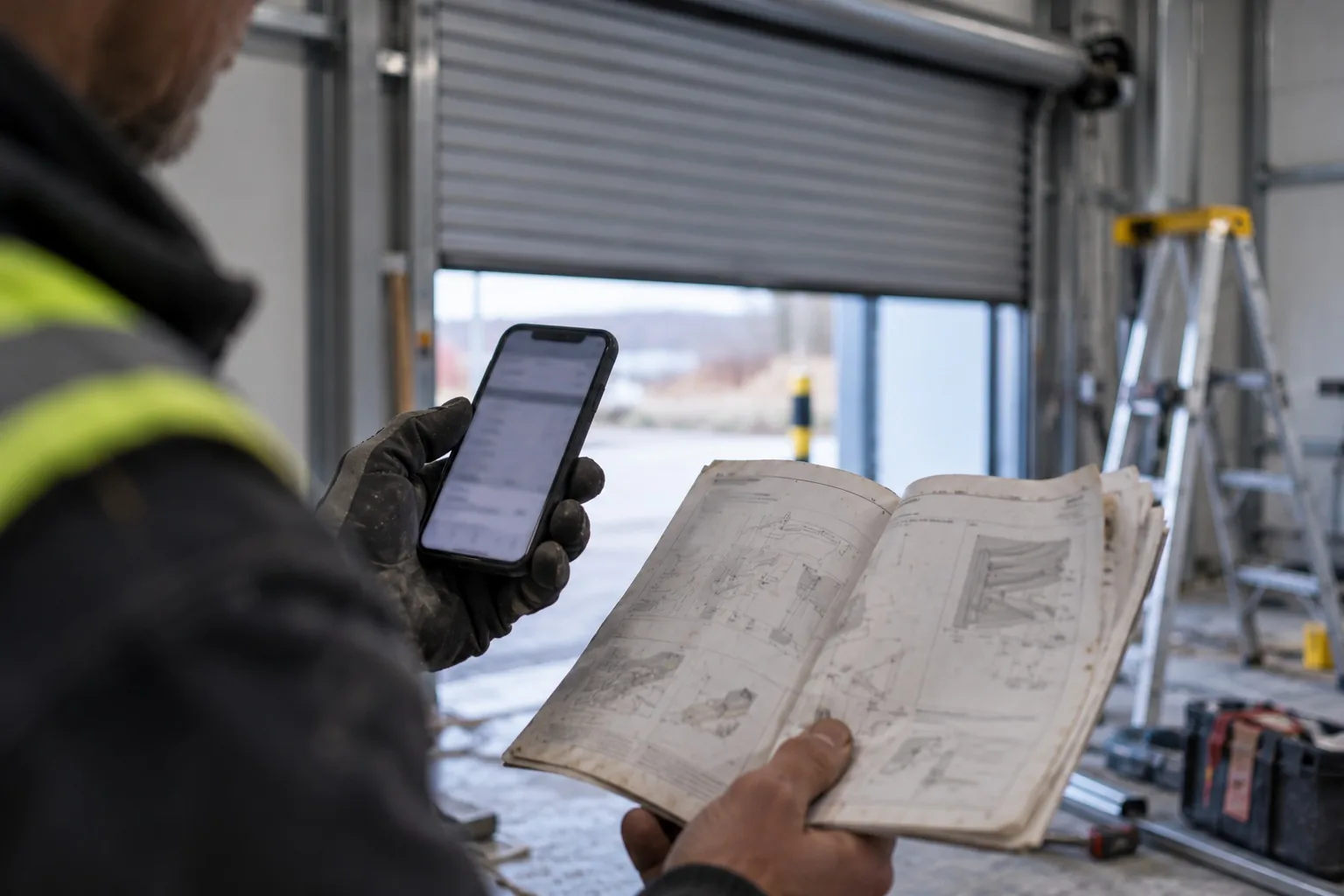
Figures for “repetitive tickets” are common in software marketing. They describe software help desks and retail customer service, where questions are about passwords and parcels. A technical helpline at a door, heating or security manufacturer is a different animal: the caller is a professional, standing at the product, with a specific step they are stuck on.
What published research does show is how often self-service fails. Gartner surveyed 5,728 customers in December 2023 and found that only 14% of issues were fully resolved in self-service, and that even for issues customers called very simple, only 36% were. The most common reason for failure, in 43% of cases, was that the customer could not find content relevant to their issue. The release does not say who the customers were or which countries they were in, so read it as general customer service and not as a figure for technical helplines.
Where the content exists, what fails is getting the right piece of it to the person at the moment they need it.
The method: five days and a tally sheet
- Pick a normal week. Not the week after a product launch, and not the week before Christmas.
- Log every inbound technical contact. Phone, email and messages, from installers and distributors. One line each: time, product, topic in a few words, and whether it was resolved in that contact.
- Group the topics on the Friday. “Limits on the 200” and “how do I set the travel” are the same topic. Expect a dozen to twenty-five groups.
- Put each group through two tests. The diagram below shows them.
- Count. The share of calls in the routine groups is your number.
Two tests for every topic
Applied to the topic, not to each call
Is the answer in your manuals, bulletins or parameter tables?
Not documentedGoes to an engineer. Worth writing down.
Would any two of your advisors give the same answer?
Routine and documentedThe guide can answer it.
Needs judgementStays with your team.
What a week looks like
Here is a worked example: one week of 247 technical calls on a range of industrial door operators. The numbers are invented to show what the tally sheet looks like once it is sorted. Your own week may look quite different, which is the reason to count it.
A sorted tally: one example week of 247 calls
Illustrative. Columns are each topic’s share of the week; the line is the running total. Blue topics are routine and documented.
- Setting the limits
41 calls · 16.6%
Running total 17% - What a fault code means
36 calls · 14.6%
Running total 31% - Parameter values
29 calls · 11.7%
Running total 43% - Safety edge wiring
24 calls · 9.7%
Running total 53% - Photocell wiring and alignment
19 calls · 7.7%
Running total 60% - Pairing a remote
16 calls · 6.5%
Running total 67% - Intermittent faults
14 calls · 5.7%
Running total 72% - Factory reset
12 calls · 4.9%
Running total 77% - Other
12 calls · 4.9%
Running total 82% - Commissioning on an unusual site
11 calls · 4.5%
Running total 87% - Spare part numbers
10 calls · 4.0%
Running total 91% - Warranty questions
10 calls · 4.0%
Running total 95% - Third-party equipment
8 calls · 3.2%
Running total 98% - Water or impact damage
5 calls · 2.0%
Running total 100%
- 1Setting the limits41
- 2What a fault code means36
- 3Parameter values29
- 4Safety edge wiring24
- 5Photocell wiring and alignment19
- 6Pairing a remote16
- 7Intermittent faults14
- 8Factory reset12
- 9Other12
- 10Commissioning on an unusual site11
- 11Spare part numbers10
- 12Warranty questions10
- 13Third-party equipment8
- 14Water or impact damage5
Read your own chart from the left. The running total shows how few topics make up half the week. The blue columns show how much of it had a documented answer any advisor would give the same way. In this example week that share is 76%, with 14% needing judgement and 10% not documented. Those three shares are the result of the exercise.

What to do with your number
The routine share is what a guide can take off your advisors: every topic with a documented answer that any advisor would give the same way. The undocumented share tells you what is missing from your documentation, which is just as useful: it is a list of things your best engineers know and nobody has written down.
Start with the topic at the top of the list, and do the tally again three months later. If the routine topics have moved, your products or your installer base have changed.
Sources
- Gartner survey finds only 14% of customer service issues are fully resolved in self-serviceGartner, 19 August 2024. Survey of 5,728 customers, December 2023. Respondent type and countries are not stated.
Questions people ask
What percentage of technical support calls are repetitive?
There is no reliable published figure for manufacturers’ technical helplines, and figures from software help desks and retail customer service do not transfer. The nearest outside guide, from IT service desks, is covered in our article Technical support by the numbers. The only trustworthy number is your own. Tally five working days of calls by topic, classify each topic as routine, needs judgement or not documented, and read the share off the tally.
How do you tell a routine technical question from one that needs an engineer?
Two tests. Is the answer written in your documentation? Would any two of your advisors give the same answer? If both are yes, the question is routine. If the answer is documented but depends on what the advisor hears, it needs judgement. If it is not written down anywhere, it is not documented.
Why do installers ring with questions that are in the manual?
Because finding the right page on site is slower than ringing. The information exists; the problem is retrieval at the moment of need. Gartner found that the most common reason self-service failed, in 43% of cases, was that customers could not find content relevant to their issue.