For technical and IT leaders
Deterministic or generative: what AI technical support has to get right
A chatbot that improvises is a liability when the answer is a wiring step. What the Air Canada ruling, hallucination research and the EU AI Act mean for manufacturers.

Lingo
4 min read
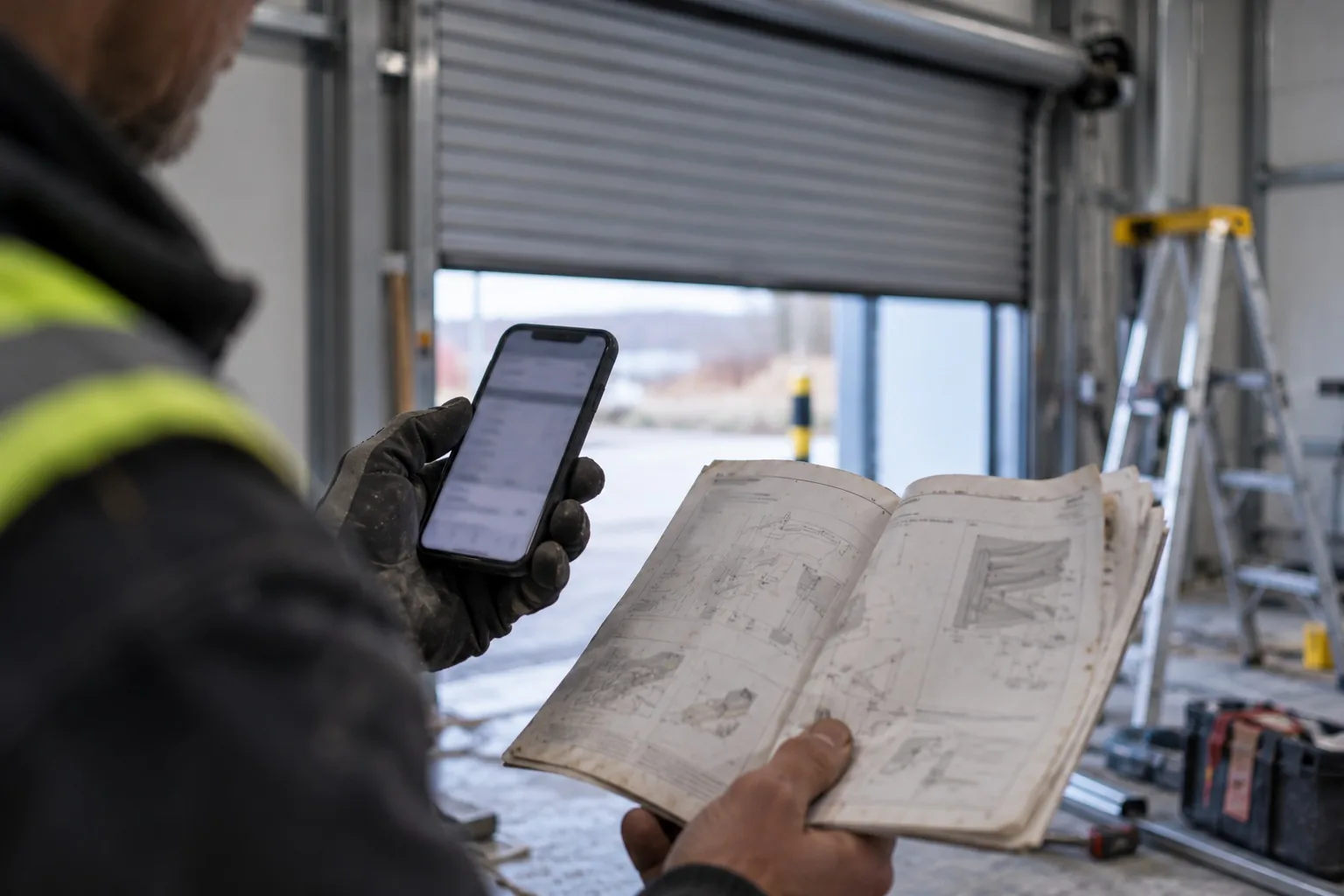
When an AI chatbot gets a refund policy wrong, it costs a few hundred dollars and a headline. When it gets a safety edge connection wrong, the door does not stop for the child standing under it. Manufacturers need a different kind of AI from the one in the news, and it is worth being precise about the difference.
In short
- Generative systems compose a new answer each time. Deterministic systems give an approved answer for each situation they recognise and pass everything else to a person.
- A Canadian tribunal treated a company’s chatbot as the company speaking: Air Canada had to honour a policy its chatbot made up.
- Even the best language models still introduce errors when summarising a document they are given. For wiring and safety steps, the answer should be the one your engineers approved.
Two ways to answer a question
Two designs for answering an installer
The same question, two routes to the answer
Generative
- Installer asks a question
- The model finds passages that look relevant
- It writes a new answer from them
- The wording, and sometimes the substance, can change from one installer to the next
Deterministic
- Installer asks a question
- The system matches it to an answer the company has approved
- It asks the next documented question, or gives the documented fix
- No approved answer: the question goes to a person
Language models are very good at the first half of the deterministic route: understanding that “the door won’t close and there’s an E12” and “E12, shutter stuck half open” are the same situation. The design question is what happens next. Does the model write the answer, or does it hand over to an answer your engineers have already checked?
The chatbot is the company
In February 2024 a Canadian tribunal decided Moffatt v. Air Canada. The airline’s website chatbot had told a customer he could claim a bereavement fare refund after travelling. The airline’s actual policy said otherwise. Air Canada argued, in effect, that the chatbot was responsible for its own words. The tribunal disagreed, found negligent misrepresentation, and held the airline responsible for all the information on its website. It ordered Air Canada to pay C$650.88 in damages, C$812.02 with interest and fees.
The sum was small. The principle is not.
A manufacturer that lets an assistant improvise installation advice owns that advice, and the consequences of following it are rarely a fare refund.
How often do models get it wrong?
There is no single error rate for AI, and anyone who quotes one is selling something. A widely cited public measurement is Vectara’s hallucination leaderboard, which gives models a document and asks them to summarise it, then checks whether the summary says anything the document does not. At its update of 22 September 2026 it covered 108 models. The best added something that was not in the source in 1.8% of summaries, the worst in 24.2%. Vectara scores the summaries with its own model on a private dataset, and changed that dataset in November 2025, so earlier figures are not comparable.
Two things follow. The best models are now very good, and even the best still add something that was not in the source in roughly one summary in fifty. That is fine for drafting an email. It is not fine for the torque setting on a brake, the terminals for a fire alarm release, or the order of steps that makes a door safe.
Use the model to understand the question. Use your engineers’ approved answer to reply.

Five questions to ask any AI support vendor
| Question | A good answer |
|---|---|
| Where does each answer come from? | A named document and page, or a path your team approved. Not “the model”. |
| Who approves an answer before installers see it? | Someone on your technical team, by name, with the change recorded. |
| What happens when the system does not know? | It says so and passes the question to a person with the conversation attached. It does not try anyway. |
| Will two installers asking the same question get the same answer? | They should: the same published steps, until your team changes them. |
| Does it tell the installer it is an automated service? | It should, from the first message. In the EU the provider has had to make sure of it since 2 August 2026. |
Lingo is built on the second design: guides are drafted from your documentation, and nothing is published until your technical team has checked it against the source document. An installer can ask for a person at any point. Our article on how Lingo turns a manual into a guide walks through each step.
Sources
- Moffatt v. Air Canada, 2024 BCCRT 149British Columbia Civil Resolution Tribunal, 14 February 2024. Paragraphs 27, 40 and 44.
- AI gone wild: airline has to honor a refund policy its chatbot fabricatedManatt, Phelps and Phillips, February 2024.
- Air Canada chatbot decisionDaily Hive, February 2024. Amounts awarded.
- Hallucination leaderboardVectara, updated 22 September 2026. Vendor-run benchmark. Summarisation of a given document, scored by Vectara’s own model.
- Transparency obligations under Article 50 AI ActEuropean Commission, July 2026.
- AI Act, Article 113: entry into force and applicationEuropean Commission AI Act Service Desk, July 2026.
Questions people ask
What is the difference between deterministic and generative AI in technical support?
A generative system writes a new answer each time from what it has learned or retrieved, so the wording and sometimes the substance can change. A deterministic system gives a fixed, pre-approved answer for each situation it recognises, and passes anything else to a person. For wiring, safety settings and fault-finding, the second is the safer design.
Can a company be held responsible for what its chatbot says?
Yes. In Moffatt v. Air Canada (February 2024), a Canadian tribunal held the airline responsible for a refund policy its website chatbot had described wrongly, and ordered it to pay the customer C$650.88 in damages. The tribunal treated the chatbot as part of the company’s website.
Does the EU AI Act require chatbots to say they are AI?
Yes. Article 50(1) of the EU AI Act has applied since 2 August 2026. It requires providers of AI systems that interact directly with people to make sure those people are told they are interacting with an AI system, unless that is obvious.